
New era for marine research in KZN
The memorandum was signed in an effort to better understand the movement and residency patterns of potentially dangerous sharks along the KZN coastline.
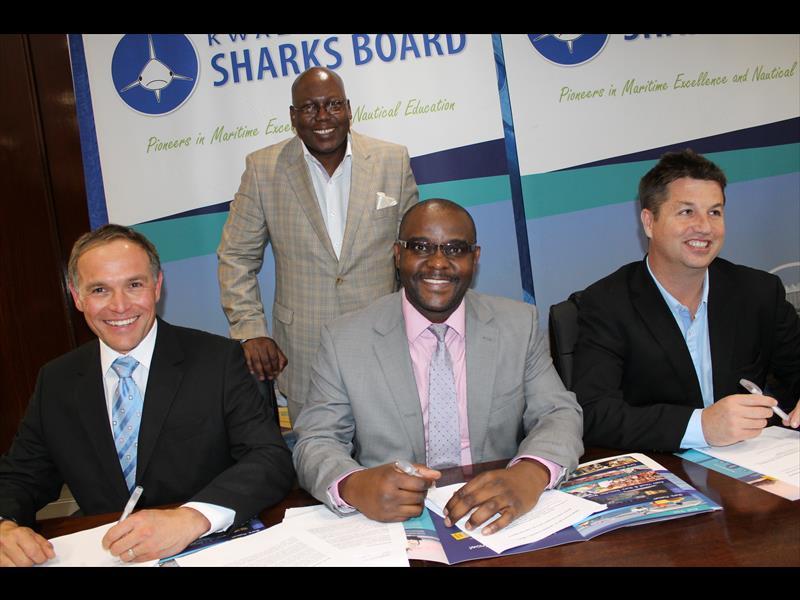

THE KwaZulu-Natal Sharks Board (KZNSB), along with two other stakeholders, announced it will be making big waves in maritime research in KZN.
The KZNSB, with the South African Institute for Aquatic Biodiversity (SAIAB) and the South African Environmental Observation Network (SAEON), signed a memorandum of understanding at the Sharks Board on Friday, with the MEC for Economic Development, Michael Mabuyakhulu, overseeing the process.
The memorandum was signed in an effort to better understand the movement and residency patterns of potentially dangerous sharks along the KZN coastline.
At the signing, Mabuyakhulu said it was of particular interest how the movement patterns of sharks are related to environmental parameters, such as water temperature.
‘This information is crucial, not only in minimising the risk of shark attacks at netted and non-netted beaches, but also in enabling the board to make informed decisions on the deployment and location of shark nets to reduce the catch of harmless animals,’ Mabuyakhulu said.
To achieve this goal, the board is developing a project which will involve deploying a network of acoustic listening stations and temperature loggers at strategic locations between Richards Bay and Port Edward, and fitting sharks with the acoustic transmitters.
Where sharks occur
The tags emit a unique code signal, which can be detected by the listening stations up to one kilometre away. Data downloaded from stations can then be used to construct a picture of when and where sharks occur.
‘To help insure that this project realises its full potential and links to other national research initiatives, we are very proud to be signing a memorandum of understanding with the SAIAB and SAEON.
‘One of the key focus areas of both these national research foundations is long-term research that contributes to our better understanding of coastal systems. For the past eight years, their joint ventures have included establishing a variety of research platforms, which have included the Algoa Bay Sentinel Site in the Eastern Cape,’ said Mabuyakhulu.
‘This site is possibly the most extensively monitored bay in Southern Africa. With their partnership, we hope to replicate a similar achievement in KZN.’
He went on to say the signing of the memorandum provides the ideal platform for sharing resources including equipment, funding, data, laboratory space and students.
‘The memorandum signals a new and exciting chapter of marine research along the KZN coastline, which will contribute to the better management and conservation of this precious natural resource.’