
Six most important vaccines you need to know
Make sure you have gotten the right vaccinations
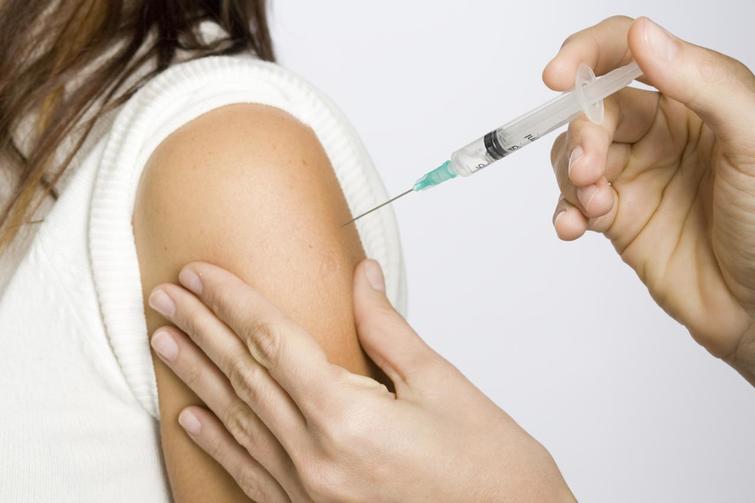

BEING a first time parent, or a parent in general, is really frightening and there is so much one needs to know to hopefully raise one’s child ‘correctly’.
But when it comes to vaccinations, not many people are aware of what vaccines need to be done and how important they are for one’s child.
All babies born in government or private hospitals are given a Road to Health booklet which the parent is responsible for to produce at all times in any medical incident.
This book helps with advising what vaccinations are needed, when to get them, one’s childs growth patterns and so on.
But all schools require proof that one’s child has been vaccinated and this booklet helps with that.
Listed below are vaccines that one’s child will receive before starting pre-school.
• All three hepatitis B vaccinations
• Diphtheria vaccine
• Tetanus vaccine
• Acellular pertussis (DTaP) vaccine
• Haemophilus influenzae type B vaccine (Hib)
• Pneumococcal conjugate vaccine (PCV)
• Inactivated poliovirus vaccine (IPV)
• Measles, mumps, and rubella (MMR) vaccine
Here are six other vaccines that one might not know of, but will need to get.
ALSO READ: UPDATE: Child vaccination debate rages on
1 Varicella (Chickenpox) vaccine
Some parents’ logic states that it is better to have chickenpox at a young age rather than when one is older.
However, getting the chickenpox vaccine is much safer than getting the disease.
According to the Center for Disease Control and Prevention (CDC), all healthy children aged 12 months through to 12 years, should have two doses of the chickenpox vaccination.
The first vaccination should be given between 12 and 15 months, and the second between 4 and 6 years of age.
2 Rotavirus vaccine (RV)
Rotavirus is a highly contagious virus that can lead to severe diarrhoea in infants and young children, and it often goes along with vomiting and fever.
If left untreated, it can cause severe dehydration and even death.
Two oral rotavirus vaccines are given.
The first dose must be given before 15 weeks of age and the last by 8 months of age.
3 Hepatitis A vaccine
Hepatitis A is an acute liver disease caused by the hepatitis A virus.
Symptoms can last from a few weeks to several months.
The vaccination must be given to children between their 1st and 2nd birthdays and should be given in two shots, six months apart.
4 Meningococcal vaccine (MCV)
Meningococcal disease is a serious bacterial illness that includes meningitis and blood poisoning.
Children can get meningococcal disease by living in close quarters, sharing utensils, kissing, or inhaling the second-hand smoke of an infected person.
Children ages 11 to 18 years should get one dose of the meningococcal vaccine (Menactra).
5 Human Papillomavirus vaccine (HPV)
Human papillomavirus vaccine (HPV) is a common virus that is passed through genital contact.
The HPV vaccine is recommended for 11 and 12-year-old girls.
It is also recommended for girls and women aged 13 to 26 years who have not yet been vaccinated.
6 Tdap Booster
Tdap boosters are combination booster shots that protect adults from diphtheria, tetanus and pertussis.
A single dose of Boostrix was approved in use from children as young as 10, up to adults as old as 64.
ADACEL is given as a single dose to children at age 11 or 12.
HAVE YOUR SAY
Like our Facebook page and follow us on Twitter.
For news straight to your phone invite us:
WhatsApp – 072 069 4169
Instagram – zululand_observer