
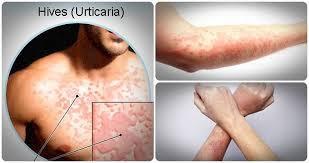

HEALTH organisations around the globe are focusing on the agony of urticaria – or hives – and how this condition can be better managed to improve sufferers’ quality of life.
Urticaria is one of the most common causes of skin inflammation worldwide and about 10 to 20% of South Africans will suffer from hives at least once in their lives.
Allergy specialist Nicole Jennings of Pharma Dynamics, says hives can be described as large, itchy, red rashes that typically appear out of the blue and usually abates within a few days.
However, in some people the condition reoccurs and can last for more than six weeks at a time, which significantly impairs a person’s quality of life.
‘According to Global Health Data Exchange, the annual years of healthy life lost per 100 000 South Africans from allergic skin reactions has increased by 71.5% since 1990.
‘This points to the need for greater awareness and education to improve patient outcomes,’ Jennings said.
And while there is currently no cure for the disease, with the help of an allergist who has the necessary expertise to diagnose and treat chronic urticaria, it can be better managed.
Hives can appear anywhere on the body, including the face, lips, tongue, throat or ears, and the red welts vary in size from a pencil eraser to a dinner plate.
They can also join together to form larger areas known as plaques.This is usually in response to an irritant when the body releases histamine that causes itching and inflammation.
Irritants
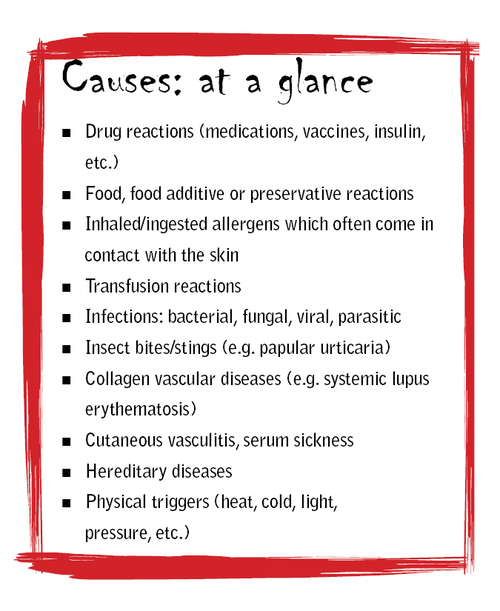
Jennings cites irritants such as food (eggs, milk, nuts, fish, shellfish, chocolate, tomatoes), certain medication, cosmetics, insect stings, infections (colds and flu), chemicals an even exposure to extreme heat or cold as triggers.
‘Anti-inflammatory medication, ACE inhibitors, painkillers, anaesthetics and some antibiotics are among the list of medications that could illicit an allergic response,’ she says.
‘On the other hand, it may not be the medication or food itself, but the preservative or colourant used that may induce hives.’
Pregnancy can also cause hives – especially in the last trimester.
Living with chronic or recurring urticaria either means you are repeatedly being exposed to a trigger or it is a sign of an underlying disease, such as lupus, thyroid disorders or rheumatoid arthritis which are all likely to cause hives.
Help
Though it does affect children, it is more common in young adults and tends to occur more frequently in mid-life, especially in women.
Jennings offers the following advice on how to relieve symptoms of urticaria:
• The best way to treat it is to identify and remove the trigger, but this requires the help of a specialist. It’s best to consult a GP or allergist who will assist you in this process.
• The itchiness associated with urticaria can usually be relieved with an antihistamine. Ask your doctor or pharmacist for an antihistamine that won’t make you drowsy. Antihistamines work best if taken regularly to prevent hives from forming.
• More severe cases of urticaria can be treated with adrenalin injections.
Those suffering from urticaria can visit www.allergyexpert.co.za for more information and support.
HAVE YOUR SAY
Like our Facebook page and follow us on Twitter.
For news straight to your phone invite us:
WhatsApp – 072 069 4169
Instagram – zululand_observer