
Ensuring the survival of Maputoland’s turtles
It is one of the worlds’ oldest turtle monitoring programmes
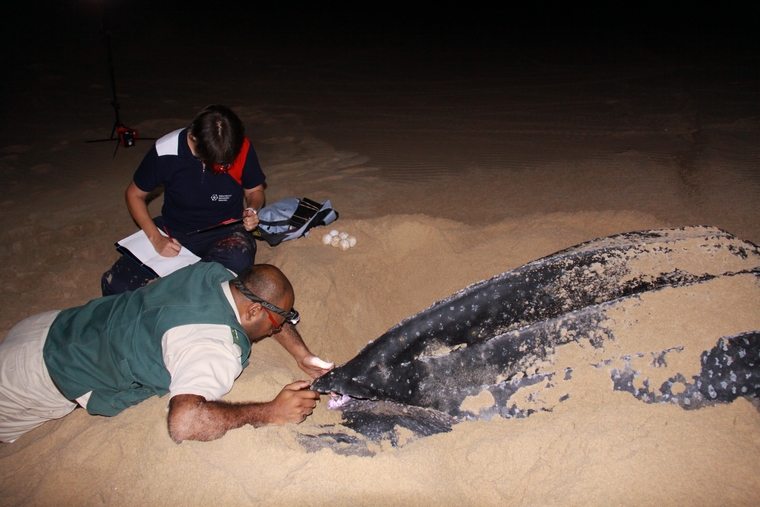

COMMUNITIES and conservationists continue to work together along the north coast to ensure the survival of two of the world’s most vulnerable turtle species – the leatherback and loggerhead turtles.
The International Union for Conservation of Nature (IUCN) Red List of Threatened Species has most turtles listed as vulnerable, near threatened or critically endangered.
Of the marine turtles listed as vulnerable, iSimangaliso’s protected coastline has five species.
The World Heritage Site’s beach is one of the last significant nesting sites for loggerhead and leatherback turtles in Africa.
The number and rate of hatchlings produced on iSimangaliso’s beaches are some of the best in the world.
Poaching is rare, natural predation low and the nests are well protected.
Monitoring
To conserve these shy giants of the sea, the Department of Environmental Affairs, together with iSimangaliso Wetland Park and Ezemvelo KZN Wildlife, is working with the park’s surrounding communities to conduct turtle monitoring along the 220km iSimangaliso coastline.
Turtle monitoring in the park has been undertaken by Ezemvelo KZN Wildlife, iSimangaliso’s conservation management partner, since the 1960s.
It is one of the worlds’ oldest turtle monitoring programmes.
Local community members are employed from October to March each year to monitor nesting, numbers and sizes of leatherback and loggerhead turtles on the 56km stretch of beach between Kosi mouth and Mabibi.
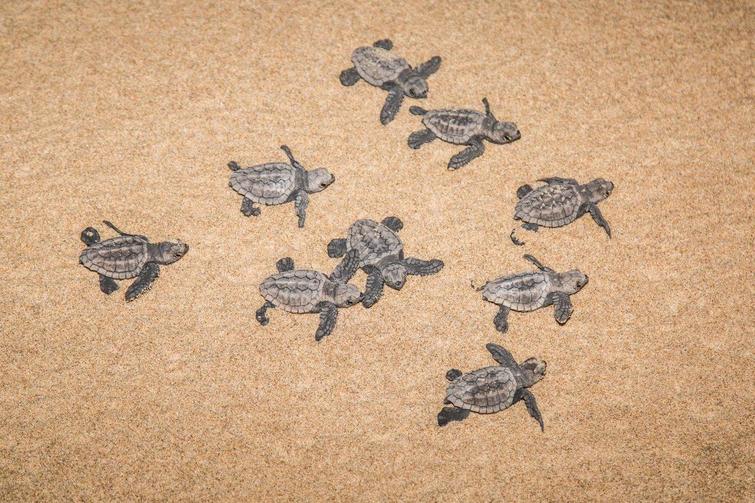
Daily patrols are undertaken along the beaches at sunrise and sunset.
The data collected by the monitors contributes to international research and is used to inform iSimangaliso’s conservation strategies.
The community monitors also serve as added protection for the turtles nesting on the beaches.
Community involvement
Surrounding communities also benefit through concessions that take visitors on turtle tours.
Both the turtle monitoring programme and turtle concessions have been instrumental in securing community support for the conservation of turtles by creating jobs and economic benefits.
iSimangaliso CEO Andrew Zaloumis says, ‘With fewer than 100 nesting females coming ashore each year, iSimangaliso’s leatherback turtles, the most southern population in the world, are rarer than black rhino and vulnerable.
‘This means they face a high risk of extinction in the wild owing to human influences.
‘Having survived aeons and ice ages along with rhinos, and at a time where more than 1 000 biological species are going extinct globally every year, their future survival lies with all of us,’ said Zaloumis.
Risks at sea
The turtles of iSimangaliso have received significant conservation attention, producing a noteworthy increase in the loggerhead turtle population since the start of the monitoring programme.
The challenge for the iSimangaliso Authority as site managers, is that once turtles leave the park’s shores and swim across the high seas, they are extremely vulnerable to threats such as long line fishing, pollution and harvesting.
HAVE YOUR SAY
Like our Facebook page and follow us on Twitter.
For news straight to your phone invite us:
WhatsApp – 072 069 4169
Instagram – zululand_observer