
The significance of Diwali
Popularly known as the 'Festival of Lights', Diwali is celebrated with the soft glow of lights, gifts, sweet meats and colourful fireworks that light up the sky.
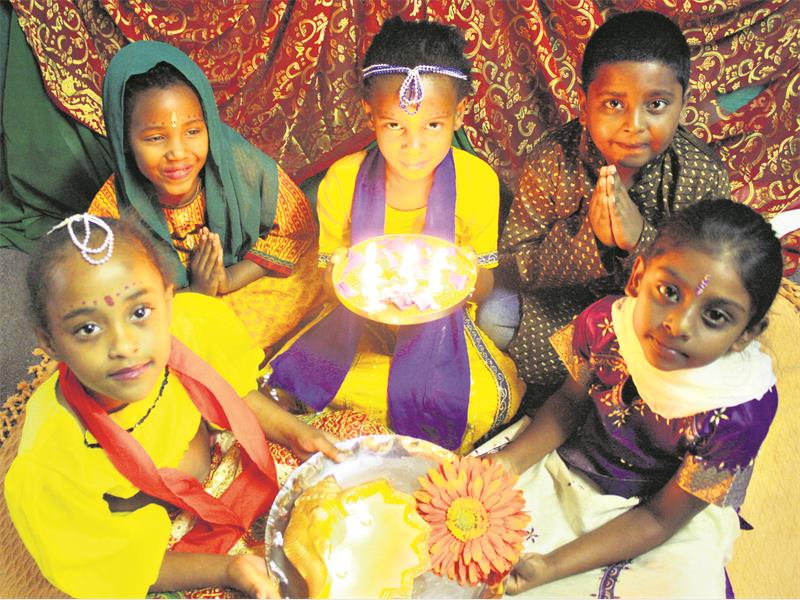

DIWALI is one of the most popular festivals in the Hindu religion and is celebrated with great enthusiasm and fervour worldwide.
Popularly known as the ‘Festival of Lights’, Diwali is celebrated with the soft glow of lights, gifts, sweet meats and colourful fireworks that light up the sky. Some families celebrate this festival with a religious fast and other rituals, while for others it is primarily a social occasion where friends and relatives are visited and sweets and food items are exchanged.
It is also a time of giving and receiving new clothes.
Diwali has many legends and religious accounts associated with it.
Lights are lit to signify the driving away of darkness and ignorance, as well as the awakening of the light within ourselves.
Goddess Laxmi plays a major role in this festival, as do Ram and Sita.
Diwali signifies many different things to people across the world.
On this auspicious day, North India celebrates Rama’s return to Ayodhya after the defeat of the evil Ravana, as well as his coronation as king.
In Gujarat, the festival honours Laxmi, the Goddess of wealth. In West Bengal, Diwali is associated with the Goddess Kali. This festival also heralds the approach of winter and the beginning of the sowing season in India.
In South Africa, the festival is celebrated elaborately with friends and family, while still upholding the traditions of the motherland, India.
However, in every region, irrespective of what it represents, the festival always signifies the renewal of life.
Celebrations
The literal meaning of ‘Diwali’ in Sanskrit is ‘a row of lamps’.
People decorate their houses with lights and colours. Entrances are made colourful with beautiful traditional Rangoli designs to welcome Laxmi, the Goddess of wealth and prosperity.
‘Rangoli’ is a Sanskrit word, signifying a creative expression of art by means of colours.
It is Indian traditional art which is generally drawn with beautiful colourful powder on the floor during festive occasions.
The creative Rangoli art is named differently in different Indian states. In South India, it is called ‘Kolam’.
Whichever way celebrated, Diwali is a celebration and triumph of light over darkness, good over evil and a time of giving and sharing.
See Diwali Festival gallery HERE