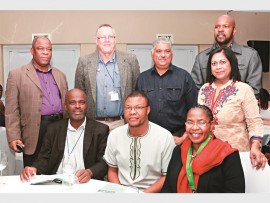
uMhlathuze Tourism competition launched
The R250 000 competition will entail tourism and waste, as product owners in the hospitality industry take innovative steps to improve service as well as the bottom line.

RAISING the status of the employee is the basis for any successful tourism operation.
It is when staff at accommodation establishments have ‘decent work’ that tourism can flourish.
This was the message at the 2015 uMhlathuze Responsible Tourism Challenge launch hosted at the Hotel Richards.
The event was held to announce a R250 000 competition that will entail both tourism and waste, as product owners in the hospitality industry take innovative steps to improve service as well as the bottom line.
The meeting, hosted by the uMhlathuze Community Tourism Organisation, followed on recent training presented by SCORE (Sustaining Competitive and Responsible Enterprises) under the auspices of ILO (International Labour Organisation).
This covered, among others, legal, practical, quality, financial, housekeeping, environmental, health and safety issues.
What works
Guests heard from participating establishments how they had benefited enormously through implementation of the training, some showing huge increases in bed occupancy and profits.
Others noted significant savings on electricity, water and chemicals, and all reported on vastly improved relationships in the workplace.
‘The concept of ‘decent work’ rests on four foundations,’ said Dr Joni Musabayana, Deputy Director of the ILO.
‘The first customer in tourism is the employee and that’s where one starts, with their fundamental rights.
‘Then comes the need for them to be productively employed, happy, enjoying what they do and with a future to look forward to.
‘Their salary must meet the needs of themselves and their extended family.
‘They also need social security, including occupational health and safety.
‘Above all, they need to be part of the decision-making, through dialogue and participation,’ said Musabayana.
Product owners present agreed that the latter had been the most significant factor in their training, as employees now saw themselves as part of the business and had submitted many impressive ideas for improvement.