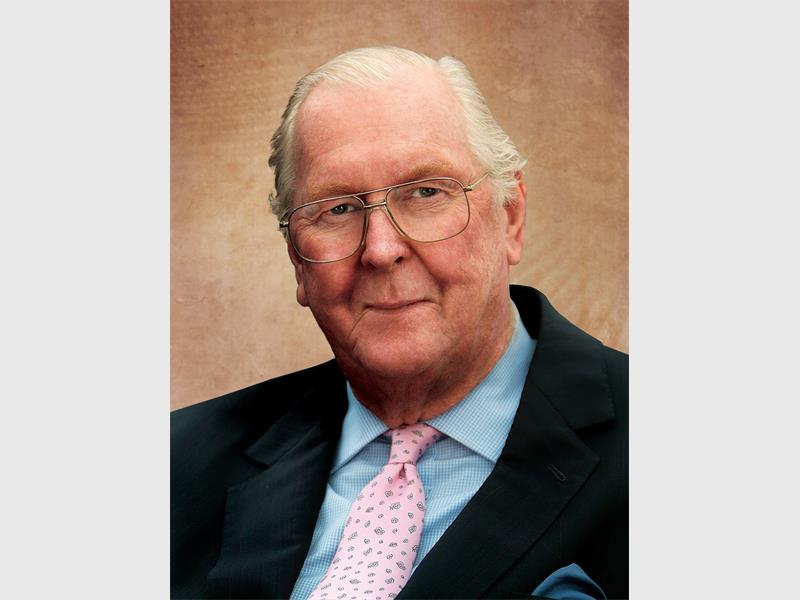

AFTER 50 years with the Grindrod Group and 21 years as its Chairman, Murray Grindrod (79) gave his last breath on Saturday.
Making the announcement on Tuesday, the company said Murray’s personal reputation of integrity will remain the cornerstone on which the business was founded.
‘The board of directors and all staff at Grindrod send their deepest condolences to his wife Pauli, daughters Anne-Marie and Josi, sons Walter and Murray Paul who are both very involved in Grindrod’s operations, and to the rest of the Grindrod family,’ said the company in a statement.
Murray Grindrod was the grandson of John Edward Grindrod, the founder of the group.
He first joined Grindrod Gersigny in 1957 – the managing agents for African Coasters.
‘In his job he learnt the trade from the wharf side, becoming involved in the hiring of personnel, stevedoring and general ships husbandry.
‘It was his ability to relate to all from a knowledgeable position that earned him great respect, not only within the company, but also in the shipping fraternity in South Africa and internationally.’
Still in his early thirties, he was invited to serve on the Transport Advisory Committee of the Department of Transport and was later the President of the South African Shipowners’ Association.
The Grindrod Group became the leading ship owner in South Africa after Murray followed the acquisition of the majority shareholding from Union Corporation’s successor, Gencor, in 1986 and later negotiated successfully for the purchase of Safmarine’s 40 percent shareholding in Unicorn in 1998.
‘During the years of successes and difficult patches, the stabilising factor in Unicorn had been the firm, pragmatic voice of Murray Grindrod.’
Richards Bay’s Grindrod Navitrade Terminal is the only other local coal storage facility aside from the Richards Bay Coal Terminal (RBCT).
It is currently being expanded in a joint venture with RBT Resources in phases to 20 million tons per annum throughput capacity and will service BBBEE mining companies, including junior miners, by providing them commodity export capacity on a contracted basis.