
Minister finally releases poaching statistics
Minister of Environment Affairs Edna Molewa has finally released the much anticipated rhino poaching statistics for 2016
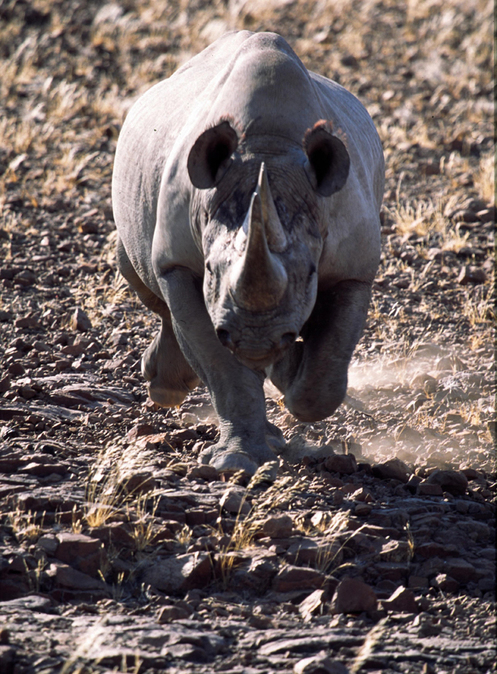

AFTER a silence of nine months, Minister of Environment Affairs Edna Molewa has finally released the much anticipated rhino poaching statistics for 2016.
The announcement comes after many delays and postponements, prompting conservationists and other concerned bodies to believe all was not well in the department.
Fuelling the speculation was the alleged involvement of Minister of State Security, David Mahlobo, in dubious rhino horn dealings, which was exposed late last year.
The statistics show a decline in the number of rhinos poached, both for the country as a whole and for Kruger National Park (KNP).
According to her announcement, 1 054 rhino were poached in 2016 compared to 1 175 in the same period for 2015, representing a decline of 10.3%.
These figures do not correlate with those kept by private organisations, which showed in early January that the number of rhino deaths already stood at 1 105.
At that stage, Mpumuplanga had lost 33 rhinos and KZN 162.
The official announcement did not give the final figure for KZN, but Molewa did mention in passing that there was an increase.
In her address, she chose to focus on the KNP, where she reported a loss of 662 rhino compared to 826 in 2015, representing a reduction of 19.85%.
This is despite a 16.9% increase in the number of illegal incursions into the Kruger National Park.
She said syndicates are feeling the pressure from the interventions being employed in the KNP.
In 2016 there were a staggering 2 883 instances of poaching-related activities (such as poaching camps, contacts, crossings, sightings, tracks and shots fired) in the park, compared to 2 466 recorded the previous year.
The criminal gangs are armed to the teeth, well-funded and part of transnational syndicates who will stop at nothing to get their hands on rhino horn.
National priority
Molewa said rhino poaching was a national priority crime.
‘The Intensive Protection Zone (IPZ) approach in the KNP is working well and ensures more tailored solutions to the different protection zones, including for the protection of elephant,’ said Molewa.
Key to this success has been the development of world class anti–poaching units such as an air wing, a canine unit, a special ranger capability, protection services and an environmental crime investigation unit.
SAPS reported that 680 poachers and traffickers were arrested for rhino related poaching offences nationally, a marked increase in arrests from 317 in 2015.
A total of 148 firearms were seized inside KNP in 2016, and six in areas bordering the park.
The Department of Justice and Constitutional Development is next week opening the Skukuza Regional Court. High profile cases will be transferred to this court which will ensure faster turnaround times.
In September last year a rhino survey using the scientifically accepted block count method recorded that between 6 649 and 7 830 White Rhino were in the Kruger National Park.
This figure is lower than the 8 365 to 9 337 counted during the 2015 census.
A total of 349 to 465 Black Rhino were counted in the Kruger National Park in 2016, compared to 313 to 453 in 2015.
It is believed the drought had a minimal affect on the Black Rhino population.
HAVE YOUR SAY
Like our Facebook page and follow us on Twitter.
For news straight to your phone invite us:
WhatsApp – 072 069 4169
Instagram – zululand_observer