
iSimangaliso calls for assistance
Poaching levels have reduced over the past decade, but this will not be easily eliminated
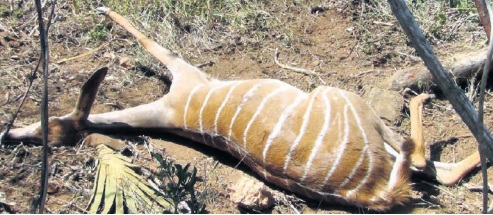

THE iSimangaliso Wetland Park’s management has called on visitors to the 3 332 million ha marine and terrestrial park to report any injured animal.
Unfortunately, poaching and snaring are constant threats throughout protected areas in Africa and iSimangaliso is no exception.
With increasing human pressure, drought and unemployment in rural areas around parks, and 80% of iSimangaliso’s neighbours living below the poverty line, circumstances inevitably lead to increased incursions.
Active patrols by dedicated park rangers are essential to monitor the situation on the ground.
Poaching levels have reduced over the past decade, but this will not be easily eliminated.
Snaring remains a constant threat and these evil contraptions cause prolonged suffering and misery to the animals caught in them.
Even if the animal manages to escape, parts of the wire often remain attached and continue to constrict parts of their bodies.
It is in these cases where iSimangaliso is calling for the public to assist by reporting snared animals.
Good news story
During October, uMkhuze visitors Barry and Celia Coleman happened to spot and photograph a young elephant with a herd, drinking at the kuMasinga Hide, with what appeared to be a snare on its lip.
They showed these photographs to iSimangaliso CEO Andrew Zaloumis who had introduced himself to them while undertaking an inspection.
The following day, Ezemvelo KZN Wildlife monitors were sent out, located the calf and passed the information to Ezemvelo KZN Wildlife Veterinarian, Dr Dave Cooper.
At first light the next morning they re-confirmed the position, and Cooper was flown by anti-poaching pilot Menno Buyze to the area where the herd was seen.
Some skilled flying was required to coax the elephants out of the tree cover and eventually separate the mom and calf from the herd.
Cooper immobilised the pair and landed nearby.
The sedated animals were only down for a couple of minutes while he checked for the snare.
Once close up he established that it was in fact an old wound and fortunately the snare wire had been dislodged and was no longer in place.
The wound had healed well, leaving a pink mark, but with no other lasting effects.
The calf was woken up and sent back to mom and the herd, no worse for wear.
Mostly man-induced
Numerous incidents of man-induced injuries are dealt with annually by Dave Cooper and rangers, in almost every type of animal from hippo or crocodile to antelope, elephant, giraffe, cheetah, wild dog or rhino.
A well-known hippo in the Lake St Lucia Estuary, famous for his diurnal wanderings around St Lucia town, is nicknamed ‘Scarface’ as he sports a vivid stripe across his snout from an old snare.
Animals found with snares on them include a giraffe and wild dog at uMkhuze and a hippo in the Lake St Lucia Estuary section.
While rangers and staff are always vigilant for injured animals, iSimangaliso Park Operations Director Sizo Sibiya says, ‘It is a huge help when visitors add to our eyes and ears on the ground, and bring to our attention any sightings of snared or injured wildlife so that these can be investigated.
‘Clear photographs and accurate locations are always of great assistance in following up on such incidents.’
Visitors noting any injuries or other incidents, may be reported to the Park’s 24-hour emergency line 082 7977944.
HAVE YOUR SAY
Like our Facebook page and follow us on Twitter.
For news straight to your phone invite us:
WhatsApp – 072 069 4169
Instagram – zululand_observer