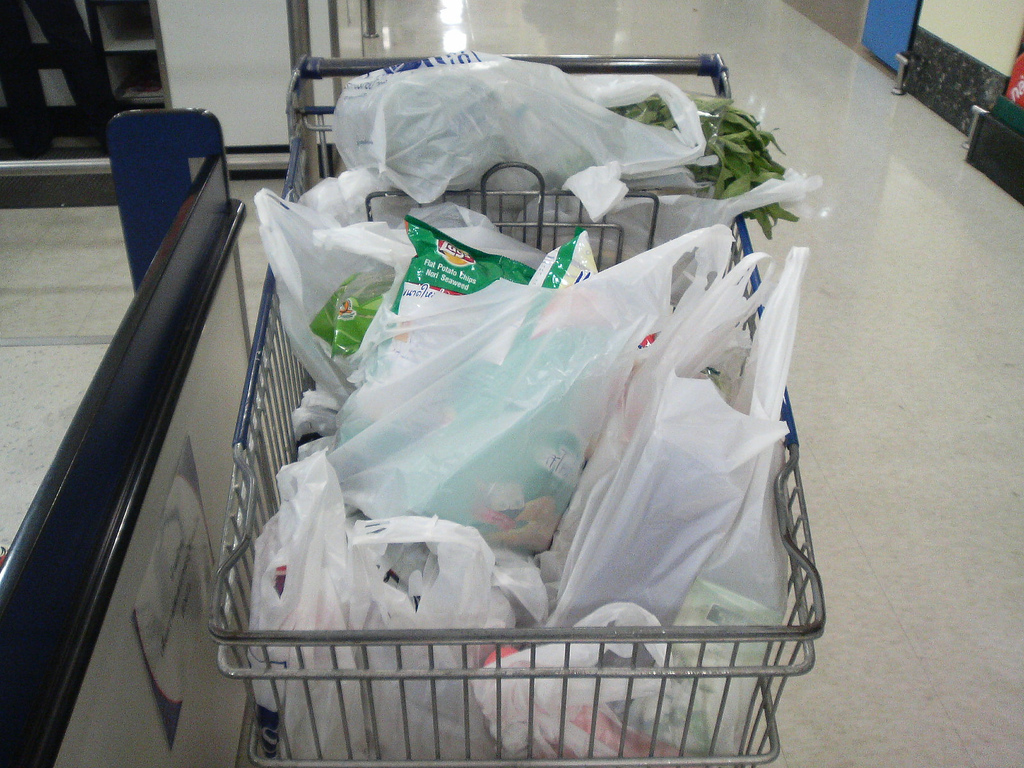

HUNDREDS of millions of rands worth of plastic bag taxes have gone from the public purse to government in the past 10 years.
But all that remains clear today is that the cash cow was not used to set up a national recycling programme as planned in 2003.
When the compulsory 3c (now 4c) levy was first imposed on the grocery bags a decade ago, former Environment Minister Valli Moosa set out to clean the environment.
However, the R150-million a year payment to the Treasury is still not producing a tangible recycling industry.
According to multi-sectoral business organisation Afrikaans Handelsinstituut (AHI) Zululand President, Dawid Appel, the large amount of tax money should be producing thousands of jobs.
‘The tax was supposed to go to a recycling program, which would have meant job creation.
‘And at the moment the government is busy with the NDP (National Development Plan) programme to create more jobs. This recycling plan would actually fit in with the NDP.
‘I just hope that the NDP will succeed, unlike the bag programme,’ Appel says.
At the time the plastic levies were being implemented, the Department of Environmental Affairs (DEA) projected that 1 900 to 3 800 ‘green jobs’ would be fulfilled, but today the job count linked to the tax contributions cannot be confirmed.
A portion of the funds collected by the South African Revenue Services (SARS) was first outsourced to Buyisa e-Bags. However, the Department of Environmental Affairs last year took control amid allegations of corruption and abuse of public funds.
‘Where did all this money go to? I think that the responsible government department must explain this,’ says Appel.