
The Lawrence Anthony Earth Organisation – the bigger picture
Zululand Observer journalist LARRY BENTLEY was invited to attend the recent meeting of the Lawrence Anthony Earth Organisation (LAEO) held at the Thula Thula Private Game Reserve
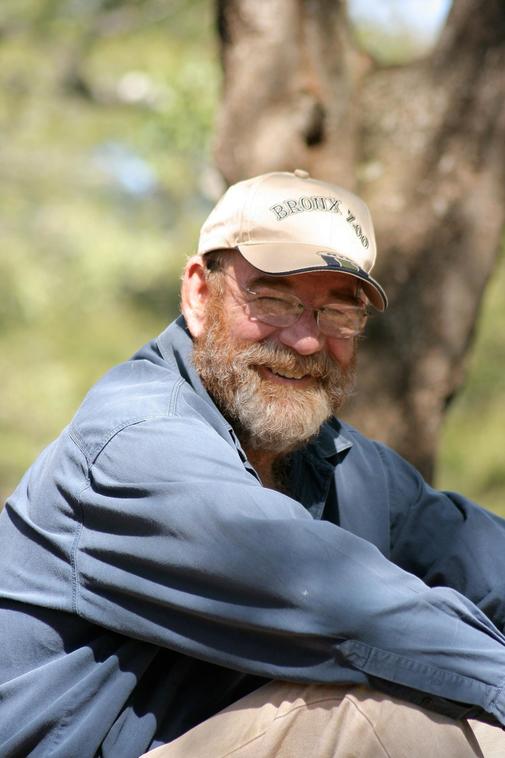

THE topics covered at the conference were overwhelming and difficult to summerise, but what follows are impressions of the work being carried out by the LAEO.
The organisation, started by the late Zululand conservationist Lawrence Anthony in 2004, is making waves in all the right places.
It is led by dynamic international president Barbara Wiseman of the US, supported by a very passionate and dedicated team contributing their expertise to driving an environmental force to be reckoned with.
Many are aware of Anthony’s books Babylon’s Ark, The Elephant Whisperer and The Last Rhino, but few know of the work being done by the organisation about which he was so passionate.
From snakes to rhinos, elephants to oil spills, all have been studied by some of the world’s brightest minds, with solutions being written into proposals to influence decision makers.
Africa
One of the LAEO projects in Africa is a natural science project run by Sayomi Tasaki of the Johannesburg chapter, titled ‘Earth, the water planet’.
It is a multi-media project which aims to teach underprivileged children about the wonders of planet earth.
Closer to home are the community game reserves of Mayibuye and Buhle Bemvelo situated near Pietermaritzburg.
Another legacy project is the Royal Zulu Game Reserve, which aims to form a large game reserve running from Thula Thula outside Empangeni through to the Hluhluwe-iMfolozi Park.
The Fundimvelo Thula Thula Rhino Orphanage is presently breaking ground in the rehabilitation of rhinos calves orphaned by rhino poachers.
The rearing of calves and their ultimate release back into the wild is being monitored by all concerned as methodology into this sensitive project is still being developed.
Elephants could possibly be included in a separate facility, as poaching of elephant for the ivory trade increases in Africa and has already started impacting on South Africa’s elephant population.
Environmental education on recycling, litter and the importance of snakes around Durban, nurseries in Uganda and energy-saving stoves are all projects being promoted by the various chapters in Africa.
Asia
One of Anthony’s earlier campaigns as documented in Babylon’s Ark was around the welfare of animals in war zones, and in particular the Baghdad zoo at the onset of the Iraqi war.
The LAEO is actively pushing for a United Nations resolution, whereby member states agree to protect facilities used for the preservation, research, breeding, treatment or study of wildlife and marine life during armed conflict.
A draft resolution in this regard has been submitted to the United Nations.
Lionel de Lange, executive director of the LAEO’s Ukraine chapter, is involved with bears in the Ukraine zoo.
These bears have recently been released into larger, more humane cages.
USA
The LAEO really showed their muscle when the organisation tackled the Deepwater Horizon oil spill (also known as the BP oil spill) in the Gulf of Mexico on 20 April 2010.
The total estimated volume of leaked oil is estimated at 4.9 million barrels.
The spill was also notable for the volume of Corexit oil dispersant used and for the application methods which were described as ‘purely experimental’.
Altogether 1.84 million US gallons (7 000 m3) of dispersants were used.
Using tact and getting an audience with top officials concerned with oil spillages, the LAEO convinced authorities that there was a better way to deal with oil spills in the future.
By moving away from the harsh chemicals to clear up oil spills, the LAEO proposed the use of ‘bioremediation’ which has scientifically proven to speed up natural processes, such as using oil-eating microbes to clean up oil spills.
Water recovery
The organisation’s most recent discovery related to ground water.
The LAEO currently has researchers developing the hypothesis to prove the existence of a ‘primary water cycle’, which is pumping fresh water into the hydrologic cycle driven by solar energy.
The primary hydrological cycle is driven by Earth energy.
Primary water is created deep within the Earth through the synthesis of hydrogen and oxygen.
Under tremendous pressure from the Earth’s internal heat, water in the form of vapour is forced upwards through fissures, becoming liquid as it cools.
This could mean that there is a constant flow of water produced by Earth energy being fed into the solar energy’s hydrological cycle.
HAVE YOUR SAY
Like our Facebook page and follow us on Twitter.
For news straight to your phone invite us:
WhatsApp – 072 069 4169
Instagram – zululand_observer