
Cane growers refute claims of female exploitation
Labour Deputy Minister accuses farmers of ‘unbelievable discrimination’ against female workers
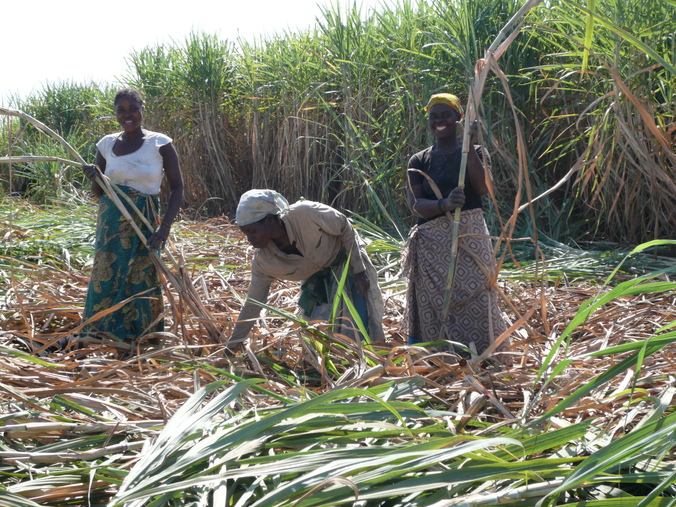

UNFAIR treatment of female farm workers came under fire from Deputy Minister of Labour Phathekile Holomisa, but his comments left a sour taste in the mouths of sugarcane growers.
Speaking at a Know Your Rights campaign last week, Holomisa told farm workers, ‘Females in the fields are often given the least desired, lowest paying jobs, are the first to be laid off, receive fewer opportunities to advance and face a culture of discrimination.’
He said they endure nearly all the issues male farm workers face, but also sexual harassment, pregnancy, gender discrimination and the extra responsibility of being the primary caregivers of children.
But according to case studies by the South African Canegrowers’ Association’s research unit, this is not exactly the case in the cane industry.
Findings indicate 45% of SA’s cane growers are female with an average sized farm of 4.6 hectares.
‘The research department has recently undertaken research into female sugarcane growers, which has been submitted to the SA Sugar Technologists Association (Sasta) Congress 2016,’ said SA Canegrowers’ Association Communications Manager, Ronda Naidu.
‘Of particular interest is that a large percentage of small-scale and land reform growers perform their own labour.
‘It is also worth noting that legislation such as the Basic Conditions of Employment Act and sectoral determinations are in place to protect farm workers and deter exploitation. This extends to female farm workers.’
Cane industry concerns
The paper said cane grower leaders have indicated a desire to see more women graduate to becoming farm owners and ultimately taking up leadership positions within industry structures.
But it says despite opportunities for female growers within the industry, social and cultural practices within rural communities is holding back transformation.
‘Women within the sugar industry and other agricultural sectors are often economically stretched, given their responsibilities to family, home and the community,’ states the paper.
‘An appreciation of women farmers’ roles, their importance and the constraints within which they operate is an essential prerequisite to devising policies to improve productivity and socio-economic development.’
The paper shows that of the total population of small scale growers, 48% are female, but they have significant challenges regarding education.
The majority of female small scale farmers have no formal education – only 21% have matric and 6% have tertiary qualifications.
Another hurdle is lack of access to quality arable land.
‘In South Africa, equitable land access is a burning political and developmental issue and is one that is currently not being tackled effectively at policy or implementation levels.
‘Women’s land access has been limited by their social position in traditional communities.’
HAVE YOUR SAY
Like our Facebook page and follow us on Twitter.
For news straight to your phone invite us:
WhatsApp – 072 069 4169
Instagram – zululand_observer