
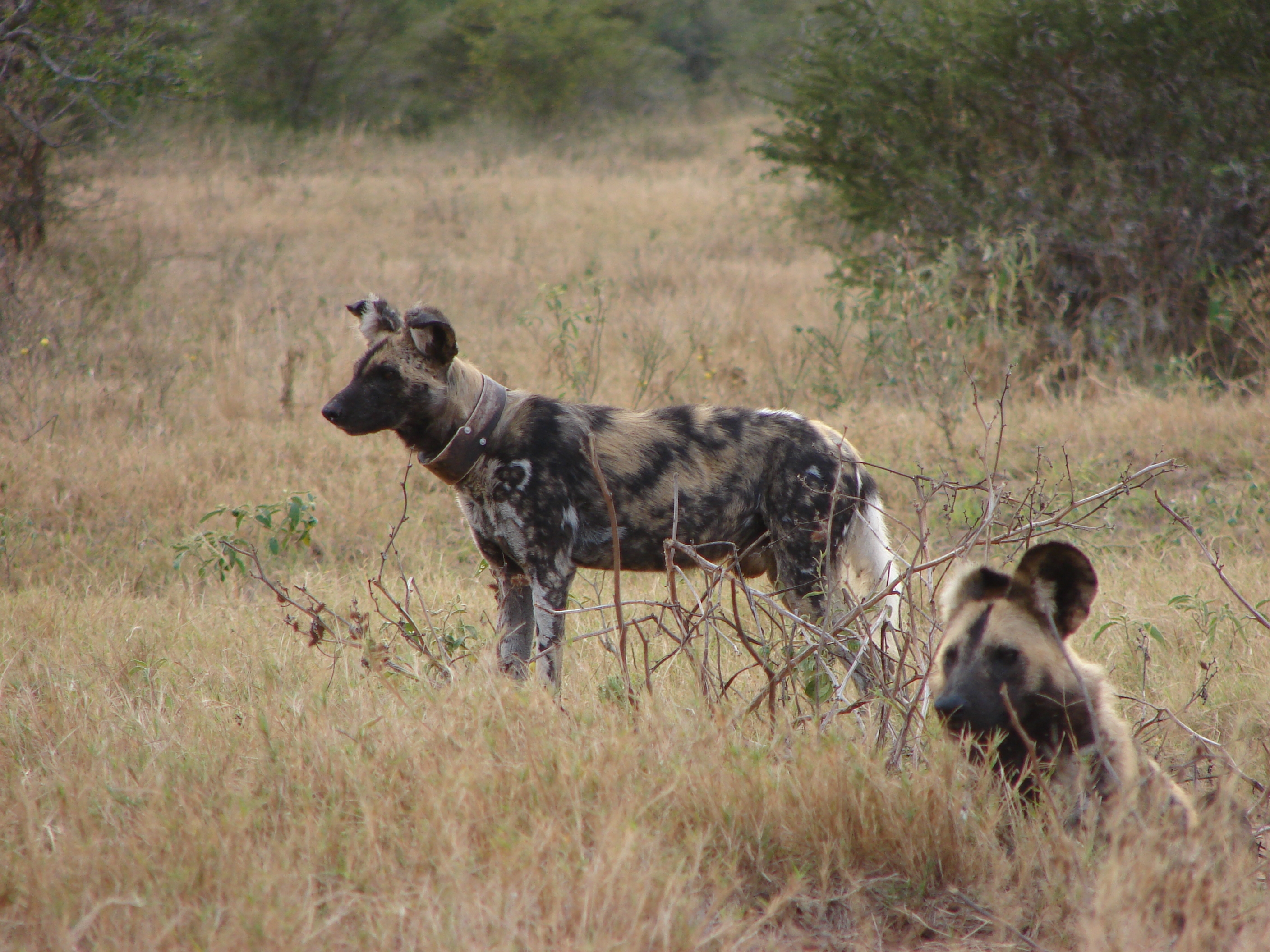

The national managed metapopulation of wild dogs (the geographically isolated subpopulations in fenced reserves around South Africa cooperatively managed as a single population) is, on the surface, relatively stable if one simply looks at the numbers of individual wild dogs and the combined total of approximately 180.
Despite this I cannot recall a more complex time for the metapopulation in the past six years.
Mkhuze Game Reserve in iSimangaliso Wetland Park has fortunately defied recent history when few pups emerged from annual denning, and currently still has 12 pups from the litters of the alpha and beta female.
The intensive monitoring effort of this pack by the WildlifeACT team continues, an important component for early detection of snares which have killed or maimed a high proportion of wild dogs since the first reintroduction in 2005.
Hluhluwe-iMfolozi Park (HiP) has produced relatively few pups in 2013 compared to the 36 pups of 2012 and although pack numbers remain stable, the pack sizes are generally considerably smaller than seen over the past three years.
To add some flavour to this mix, there is a dispersal group of seven males which has left HiP.
The park’s Ezemvelo KZN Wildlife wild dog monitor is tracking this group on communal and State lands neighbouring Ulundi and Opathe while plans to retrieve these wild dogs develop.
Elsewhere in the province the two adult females at Zimanga have managed to raise eleven 2012 pups to sub-adulthood in the absence of an alpha male.
We will need to intervene with relocations to prevent potential inbreeding in 2014.
At Tembe, the population reintroduced after much political wrangling from 2009 until 2011, has remained stable with a pack of nine.
By all accounts in recent months there have been fantastic sightings of this pack close to the lodge and at Mahlasela hide.
Further north in the country, Madikwe Game Reserve has had a prolific period to a point where we are working to relocate several groups which exceed the population the reserve management believes is sustainable.
The Pilanesberg pack is reportedly stable and the pack at Tswalu is still being held comfortably in a boma until such time the reserve is ready for the release.
Most dramatically however, the recent events at Khamab Kalahari Reserve, close to the Makopong border post with Botswana, have shown us how tenuous success is.
Having recently seen their population increase to 25 with a litter of eleven pups, approximately one month later the pack was culled by a sudden canine distemper virus outbreak. Six of the pack remain, but appear stable.
Given the balanced sex ratio and social cohesion within the remainder of this pack, it would be unwise to attempt to add further animals from other reserves.
Fortunately though, should reinforcement be required, logistical capacity and sufficient wild dog subpopulations now exist nationally (long may it last) to enable a response.
Just another month of wild dog conservation…
Find more wild dog information at www.wagsa.org.za.
If any readers observe wild dogs outside of protected areas, please note the location of the sighting, whether the animal is wearing a tracking collar and identify, or ideally photograph any characteristic markings. Please notify Brendan Whittington-Jones on 072 9929483.