
New port rules address water crisis
‘It is incumbent upon all industry players to seriously review their own water utilization’
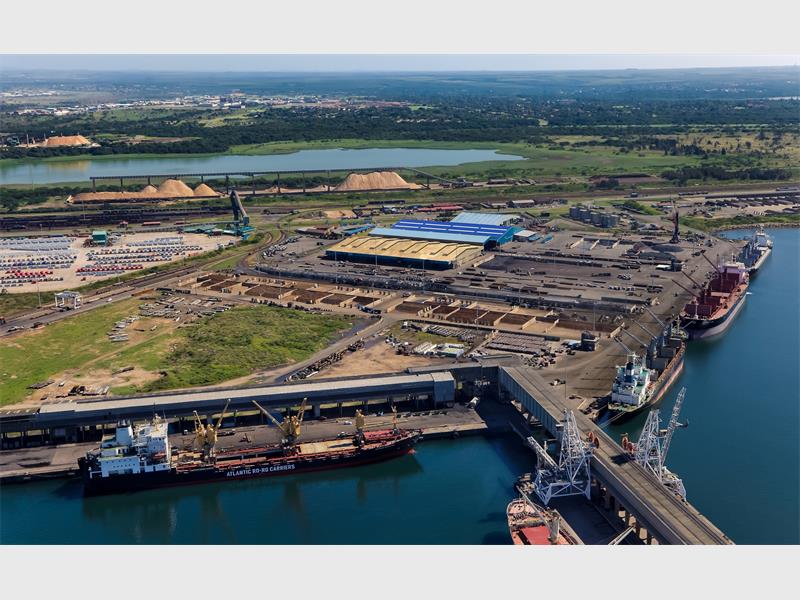

TRANSNET National Ports Authority (TNPA) on Thursday announced the implementation of strict new water regulations at the Richards Bay harbour, compelling port users to cut their usage.
In a letter to local industry leaders, Richards Bay Port Manager Preston Khomo said it is aligning its rules with the directive issued by the Minister of Water and Sanitation.
‘As you may be aware, Zululand, and more specifically the uThungulu District, finds itself in the grip of one of the worst droughts in the last few decades,’ said Khomo.
‘It has come to our attention that the City of uMhlathuze’s feed dam, Goedertrouw (Lake Phobane) is fast approaching its critical level of 25%.
‘To realize savings on the current consumption of water, it is incumbent upon all industry players to seriously review their own water utilization.’
At a recent Port Consultative Committee meeting, ‘with the absolute survival of man and beast in mind’, Khomo confirmed the new regulations for port users.
Strict instructions
With immediate effect the sale and supply of potable fresh water to vessels calling at the port is terminated.
Apart from cases that could pose possible negative environmental impact, the use of portable and fixed dust suppression installations must also be terminated. Terminal operators will have to find alternative methods of controlling operational dust emissions.
Aside from the minimum water use requirements during the loading of woodchips, fresh water lines in the terminal operational areas will remain pressurized, strictly for the purpose of fire protection.
Over the next 30 days only, restricted use of water from subsidiary lines will be made available to terminal operators for their route preparation activities for bulk exports. This allowance will be terminated with effect from 1 April.
‘Until natural drought relief is realised by way of sustained rainfall, by decree of the Port Consultative Committee these measures are to remain in force until further notice,’ said Khomo.
‘While it is conceded that these measures may have a negative impact on some business components, so dire are the drought conditions in Zululand that the committee is resolute in its decision in the interest of basic survival of all who live here.’