
Most retirees blow money on luxuries, stats show
‘The new retirement reforms are necessary to protect people’ - ABSA Bank’s Danie Rademeyer
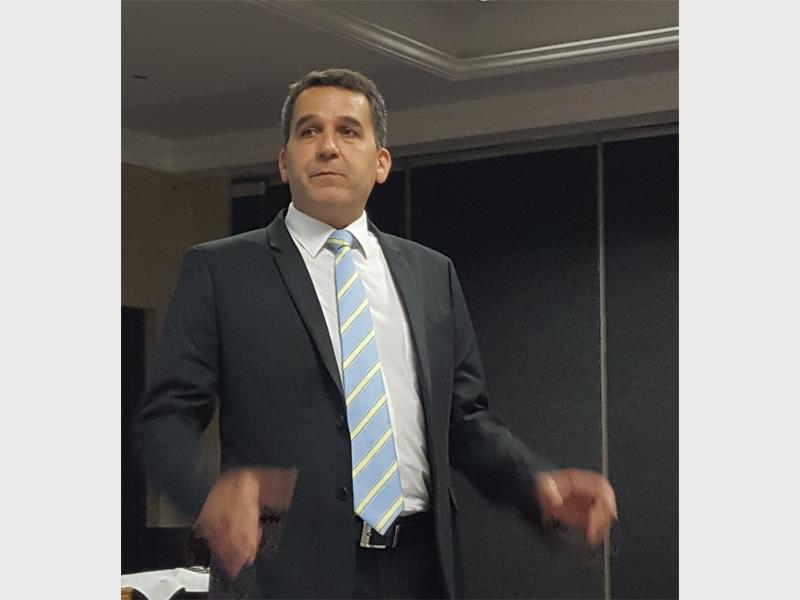

THE new retirement reforms may have unions up in arms, but they are like seatbelts – at first citizens complain about a rule Government enforced to protect its people, but eventually everyone gets used to it.
This is the analogy used by Absa Bank Financial Planner Danie Rademeyer speaking at a business breakfast on Tuesday in Richards Bay hosted by the Zululand Chamber of Commerce and Industry.
Rademeyer stated according to a Sanlam benchmark survey, 70% of people who resigned or were retrenched between 2011 and 2012, spent all their retirement money on luxuries or paying short term debt.
‘If this is accurate, far too many people are spending their money unwisely, losing it all and putting a burden on the state.
ALSO READ: New retirement reform hold only benefits
‘Government is trying to align provident funds, which pay out the full benefit in cash, with retirement and pension funds, which only pay out one third and require fund members to buy an annuity with the remaining two-thirds of their retirement benefit.
‘It resulted in a lot of pushback from unions and workers wanting the full amount, but 98% of people are not financial analysts and need legislation to protect them.’
The law, from 1 March, allows for a 27.5% tax deduction up to a maximum of R350 000 per annum for all funds, including provident.
However, last Monday Finance Minister Pravin Gordhan tabled a proposed postponement of annuitisation at a meeting with the National Economic Development and Labour Council.
Scary survey
Rademeyer said the survey indicated that 43% of members do not know where their funds were invested; 25% did not understand the benefit statement and 55% of members did not know how market movements would impact on the value of their retirement savings.
But ironically, despite more than half of people not knowing market impacts, 60% claimed they have sufficient knowledge to make their own investment decisions.
Also noteworthy, is that 25% of retirees returned to work.
Top tips
‘Start saving as early as possible and leave the savings alone for as long as you can,’ said Rademeyer.
‘Limit the amount of debt you take on – it can be a crippling financial burden if you spend beyond your means.
‘Prioritise health and medical care when saving for retirement – without health, you are nothing.
‘Take retirement seriously. Go out and find advice now!’